Problem
VCU News creates many articles that feature faculty and students from the College of Humanities and Sciences (CHS)—272 over the past year. If as webmaster of chs.vcu.edu I wanted to feature those on my website, I had to:
- Copy, paste and reformat the text from each such article on the VCU News website
- Find suitable, free images without copyright restrictions to use (VCU News’ Getty Images license did not allow for reuse on our website)
- Process the images for web use
- Hand-code images to achieve desired display because the plugin did not allow for a feature image with an automatic output
To make matters worse, a given article could pertain to one or more of our 37 other departments that have websites, as well, so content managers in each of those places had to go through the same exact steps independently. In aggregate, one article, then, could take multiple hours to fully process by multiple people and because most did not have CSS or image optimization skills, they were unable to hand-code the images, resulting in poor quality displays and slow page-loading time. Furthermore, the plugin’s home page layout was lackluster and did not promote engagement with the content.
Task
Create two new plugins to support a newsfeed that seamlessly integrates articles originating locally in each of CHS’s 37 websites and VCU News articles from a SQL database. The end goal was to produce an auto-feed from VCU News that required no work on the part of content managers.
Plugin Layouts
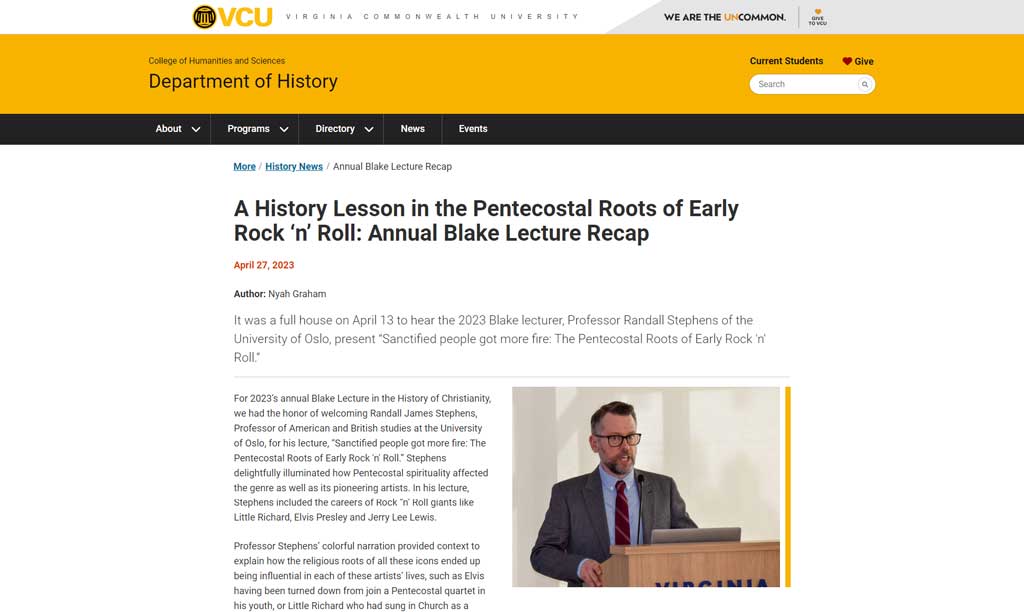
The sections below contain some before/after thumbnails that link to screenshot pages for previewing.
News Page Layout
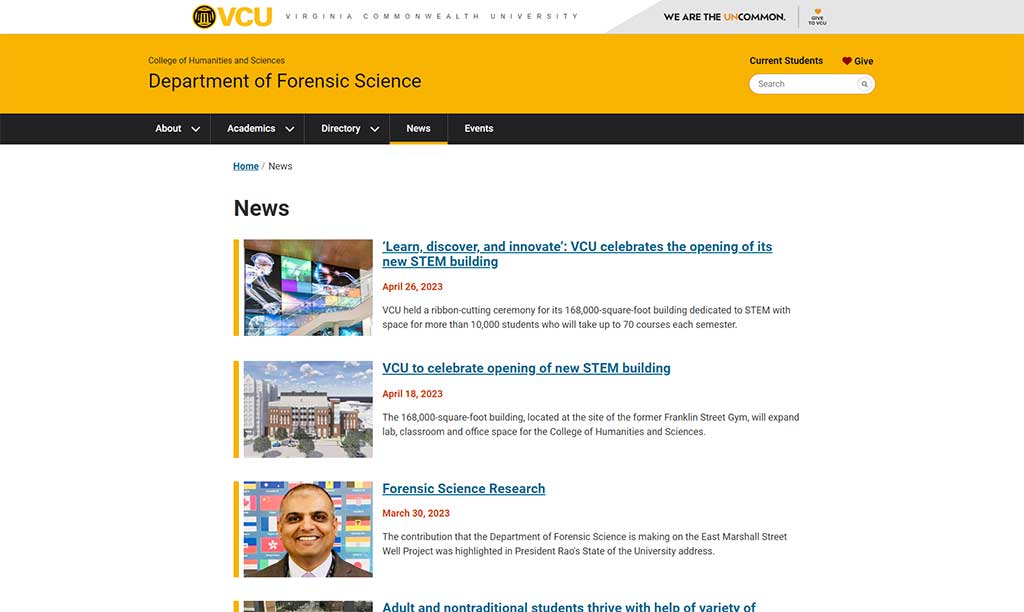
Though the uniform design would indicate articles are coming from the same source, the feed utilizes two new plugins to integrate those published by VCU News and those created by a given academic department’s content manager. The before/after below demonstrates the integration of VCU News articles that link off to the VCU News site as well as internal articles that link to a full-text .html layout in the same feed ordered by publish date.
News Page Layout Before
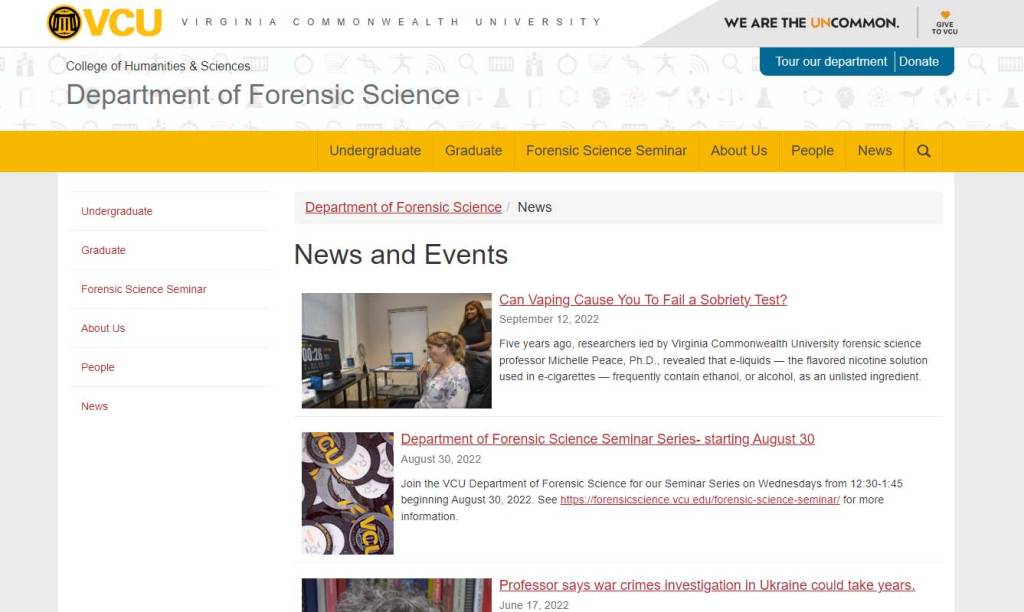
News Page Layout After
Full-Text Layout
Below a full-text .html layout is demonstrated for a locally created news article (read: a non-VCU News article). Before, content managers with no CSS skills simply skipped adding images, which, of course, make news features more engaging. The new plugin allows them to simply upload an image of their choosing and it will output pre-styled across all viewports.
Full-Text Before
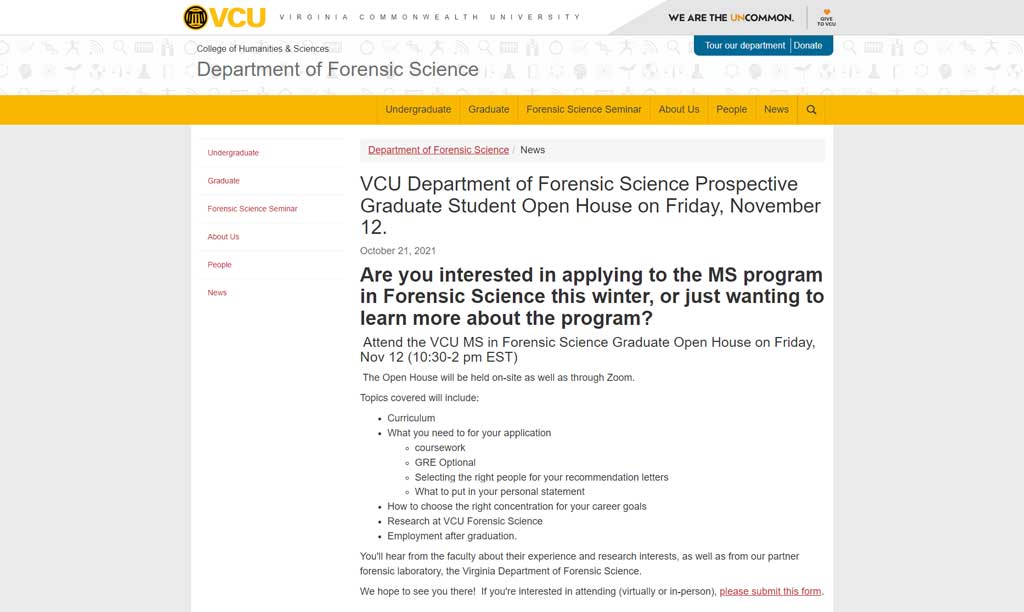
Full-Text After
Home Page Layout
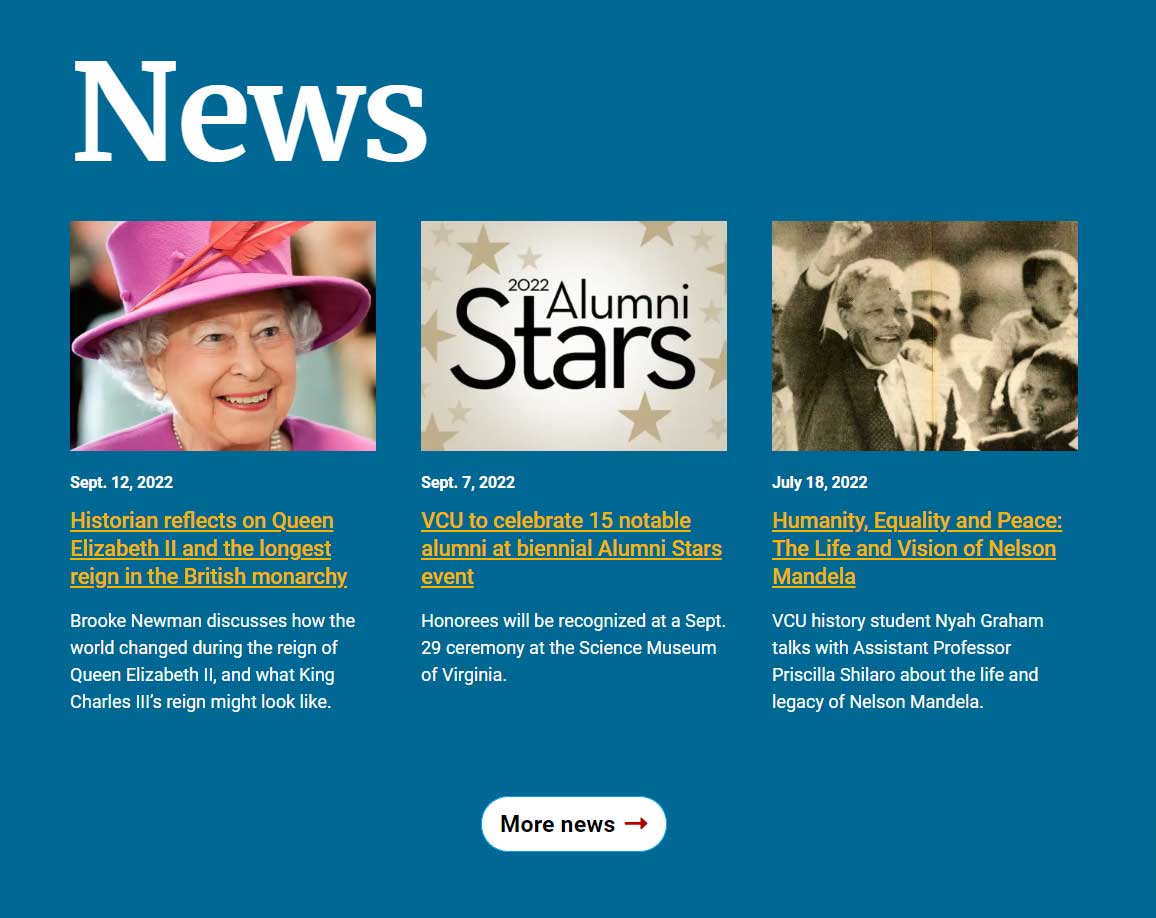
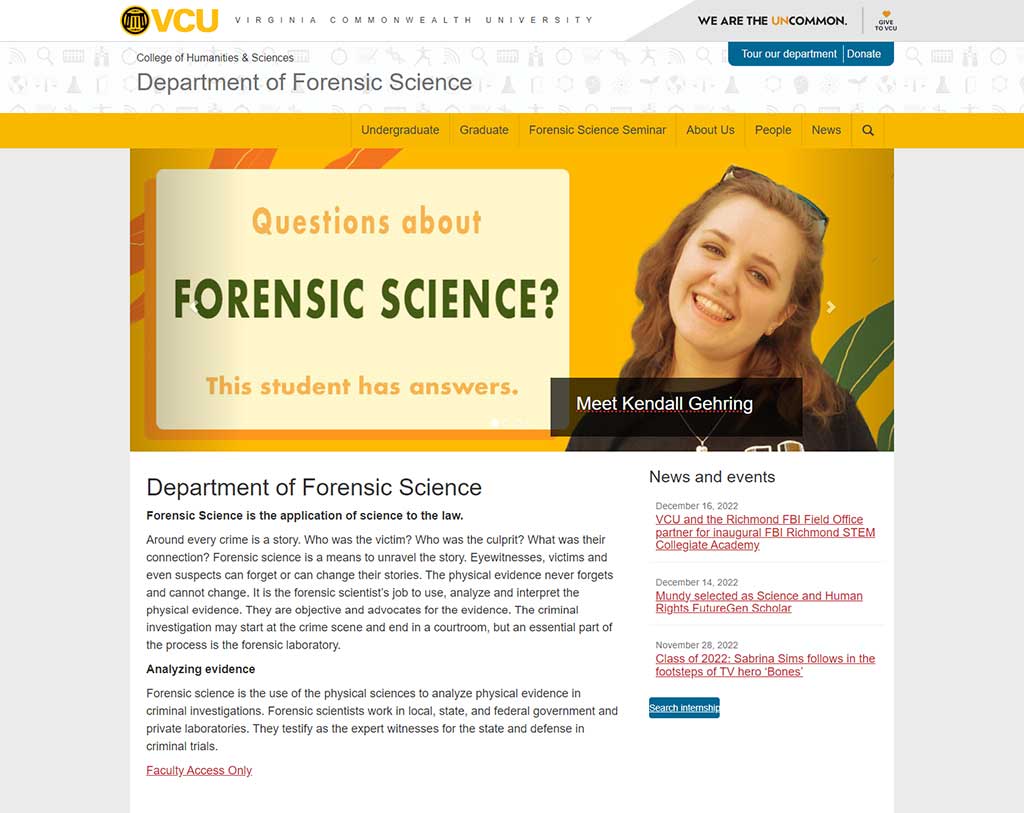
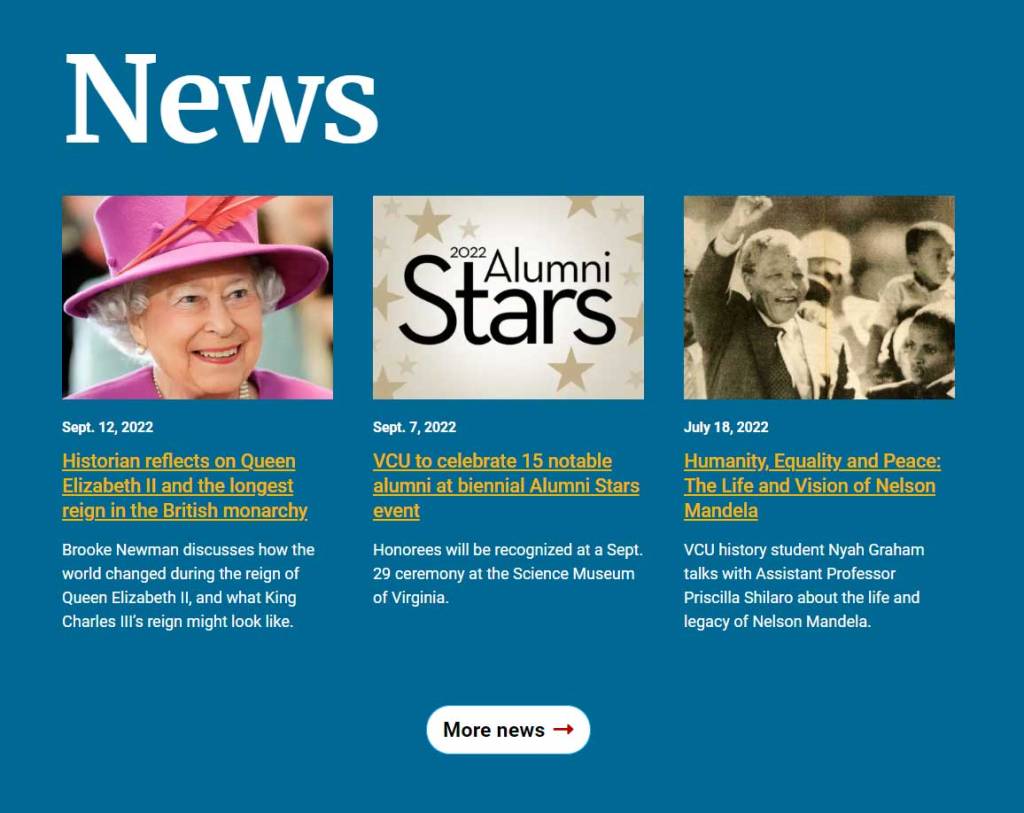
Both the old and new plugins bring in the latest three articles into a homepage feed, but the new ones do it in a more engaging fashion, with a bright background and thumbnail images for added interest.
Home Page Layout Before
Home Page Layout After
Importance and Cost Savings
Not only did this product represent a major innovation for CHS, but also for the university. (A feed with that level of sophistication had not been implemented previously at VCU, which created a template for other major units to create their own.) This product helped VCU News maximize their content across more websites and let CHS departments feature their good work without lifting a finger.
This process improvement saves me (and therefore CHS) an estimated 70 hours per year of work. Further, the aggregate savings multiplies across the academic departments resulting in hundreds of labor hours saved per year among all content managers, and thus many thousands of dollars in aggregate.
My Role
At my own initiative, I identified the need for this new efficiency and took full leadership/ownership in its design, development and implementation.
Resources
VCU Web Services provided key collaboration on database integration with the new plugins. There was no funding for additional expertise (e.g., an external vendor).
Featured Skills
- Creating cost-saving efficiencies and maximizing resources
- Collaboration
- Creative problem-solving
- Design
- Device agnostic design
- Documentation and training
- Javascript, HTML, CSS
Functionality
- Articles published by VCU News tagged with CHS content load daily into a section of the main CHS website (chs.vcu.edu) and output in a newly designed plugin.
- The content manager of the CHS site tags articles daily with the pertinent academic departments represented in the articles. The tagging mechanism prompts a publish command to the sites tagged in the plugin. For example, if an article comes in that features faculty members in the School of World Studies, the content manager adds a ‘School of World Studies’ tag in the plugin and the article publishes not only to chs.vcu.edu, but also to worldstudies.vcu.edu without School of World Studies personnel having to do a thing.
- An academic department’s content manager can add their own locally created articles into a second newly designed plugin that output seamlessly by date along with the articles from the database into a homepage feed, a main news page feed and as a full-text .html article.
 Jen Elswick